Are Double-Decker Coaches Safe? The Answer Is in the Testing
Published
Are double-decker buses safe is one of the most common questions organisers ask, and it usually gets a vague answer. The truth is that a double-decker is neither inherently safe nor inherently dangerous. What decides it is which standards the vehicle has been tested against, and how consistently the operator maintains it afterwards. Here is what the actual standards are, so you can ask the right question before you book.
In this article
- Why double-deckers get questioned
- The 30-degree tilt test
- GPS and driver hours
- What to ask to see
- FAQ
Why Double-Deckers Get Questioned
The physics is simple. A taller vehicle has a higher centre of gravity, and a higher centre of gravity means more rollover risk in a corner taken too fast or a sudden avoidance manoeuvre. That is precisely why Thailand's Department of Land Transport applies a specific standard to tall passenger vehicles rather than treating them like every other bus.
The consequence is worth noticing: a certified double-decker has been tested for something an ordinary single-deck bus never is.
The 30-Degree Tilt Test
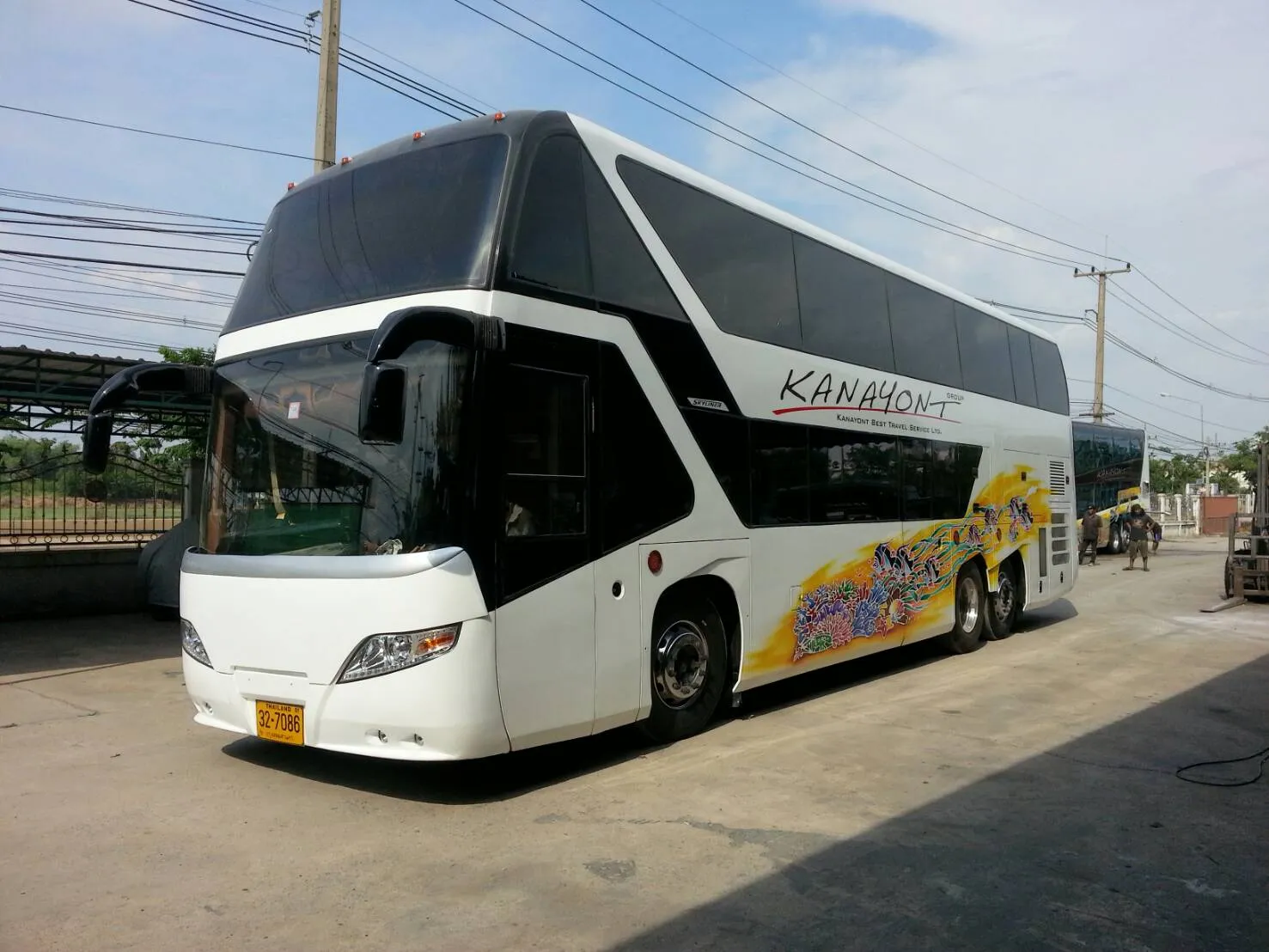
Double-deck public passenger vehicles measuring 3.60 metres or more in height must undergo a stability test under Department of Land Transport rules. The complete vehicle is driven onto a test rig and tilted. It must remain upright, without overturning, at 30 degrees.
A vehicle that fails cannot stay in service. It must be modified — vehicle height, body structure, air-conditioning mounting position, or suspension — and then retested.
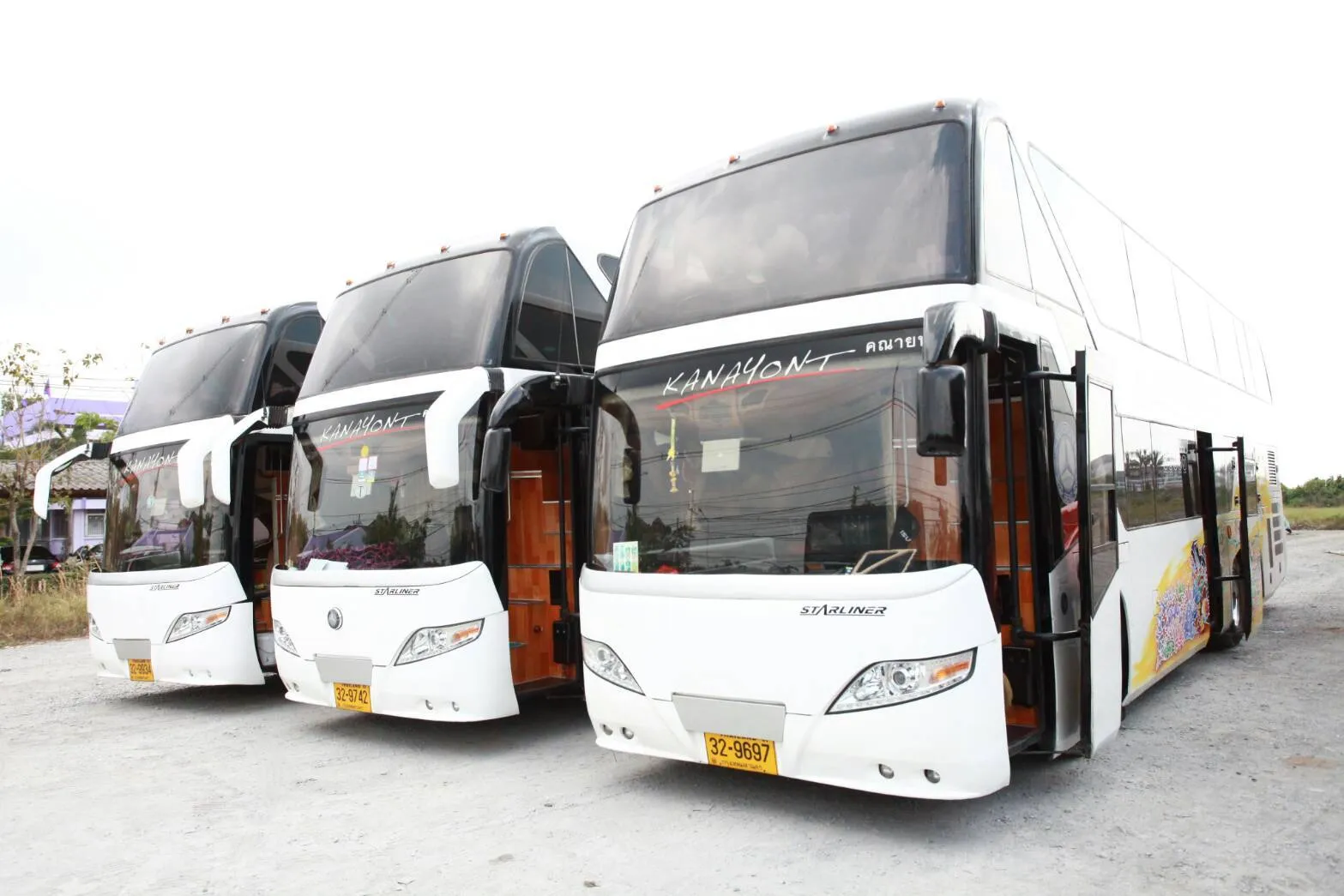
Kanayont has tested and passed both the Star King and the Skyliner, which together account for every double-deck vehicle in the fleet.
The tilt rig is not a computer simulation. The whole vehicle is physically tilted.
GPS and Driver Hours
Public passenger vehicles must carry GPS to Department of Land Transport specification. That gives visibility of vehicle position, speed, and driver hours behind the wheel.
The last of those matters more than people assume. A large share of coach incidents are not caused by vehicle condition but by a driver who has been driving too long. Recorded driver hours mean an operator can staff a route to the regulation rather than to convenience.
What to Ask to See
- Tilt-test evidence for the actual double-deck vehicle assigned
- The registration number of the vehicle, not just the model name
- Passenger insurance documentation with the per-seat figure — see Passenger insurance
- Confirmation the vehicle belongs to the operator — see Own fleet vs. subcontracted
- The driver plan for long routes or overnight work
Tips for Organisers
Ask for the documents at quotation stage, not the week before travel. An operator with complete paperwork can send it immediately; one who deflects has answered your question. And if the route includes mountain sections or sustained bends, say so early — it affects both vehicle choice and schedule planning.
Frequently Asked Questions
Are double-deckers really more dangerous than single-deck coaches? The higher centre of gravity is a real physical fact. It is also exactly why double-deckers must pass a stability test that ordinary single-deck buses do not.
What is the 30-degree tilt test? The complete vehicle is tilted on a rig and must not overturn at 30 degrees, in line with Department of Land Transport standards.
Can I ask to see the test evidence? Yes, and you should. Any operator that has genuinely tested its vehicles can produce it.
Have Kanayont's coaches passed? Yes — both the Star King and the Skyliner, covering every double-deck vehicle in the 28-coach fleet.
In Short
Whether double-decker buses are safe has little to do with the shape of the vehicle. It has everything to do with whether the operator can put the paperwork in your hands the same day you ask.
📞 Request safety documentation and a quotation: Office 02-889-3458 · Khun Sira 099-294-5526 · LINE: kanayont.bus